
Quick links…
CRL Urban Ngahere (Forest) Planting Programme
We’re planting 393 trees and over 4,000 plants around CRL stations and within four inner-city areas.
In 2019, we planted 36 native trees along Albert Street, at Te Komititanga and around Waitematā Station (Britomart) as part of Contract 1 and Contract 2 early works. These areas, together with upgraded public spaces, have been returned to the public.
Starting this year until the end of the project, we’re planting an additional 357 trees and 4,000 plants around Maungawhau Karanga-a-Hape and Te Waihorotiu stations, at Britomart Place, and in four Auckland Council-owned locations in inner-city Auckland.
While we worked hard to minimise tree removals, 206 native and exotic trees and shrubs were taken out of CRL construction zones so that construction could go ahead. As we complete urban realm improvements around stations and return spaces back to community, we are handing these areas over with newly established greenery.
Trees are being planted by the project at a ratio of almost 2:1 and there will also be significant additional greening through new shrubs and groundcover plants. Overall, there will be a net gain in tree canopy coverage created by the project once trees have matured.
When the project is fully complete, we’ll have planted almost double the number of trees than were removed, along with 4,000 additional native plants.

NEW HOME: These pōhutukawa were removed from Fenton Street, Mt Eden and replanted in Western Park, Freemans Bay
What are we planting?
Some 18 native tree species are being planted as part of the ngahere. These include Pōhutukawa, Totara, Pūriri, Kahikatea and Māhoe. We are also planting numerous native shrubs and groundcover plants, including Ota, Pukupuku, Huruhuru Whenua and Kawakawa.
Trees, plants and planting locations have been chosen to create new habitat for wildlife and create ecological corridors. We’re planting a wide variety of native species that reflect the trees and plants that traditionally exist in each area. This means they’ll be suited to local conditions and are more likely to thrive.
The only non-native trees being planted are six tulip trees along Mayoral Drive, and a cutting of the Harvey Tree (oriental plane) which will be replanted close to where the original was removed near Te Waihorotiu Station on Albert Street.
All species and locations were chosen together with mana whenua and Auckland Council. Most species are eco-sourced which means they’ve been propagated from the local wild population from within Tāmaki Makaurau Auckland.

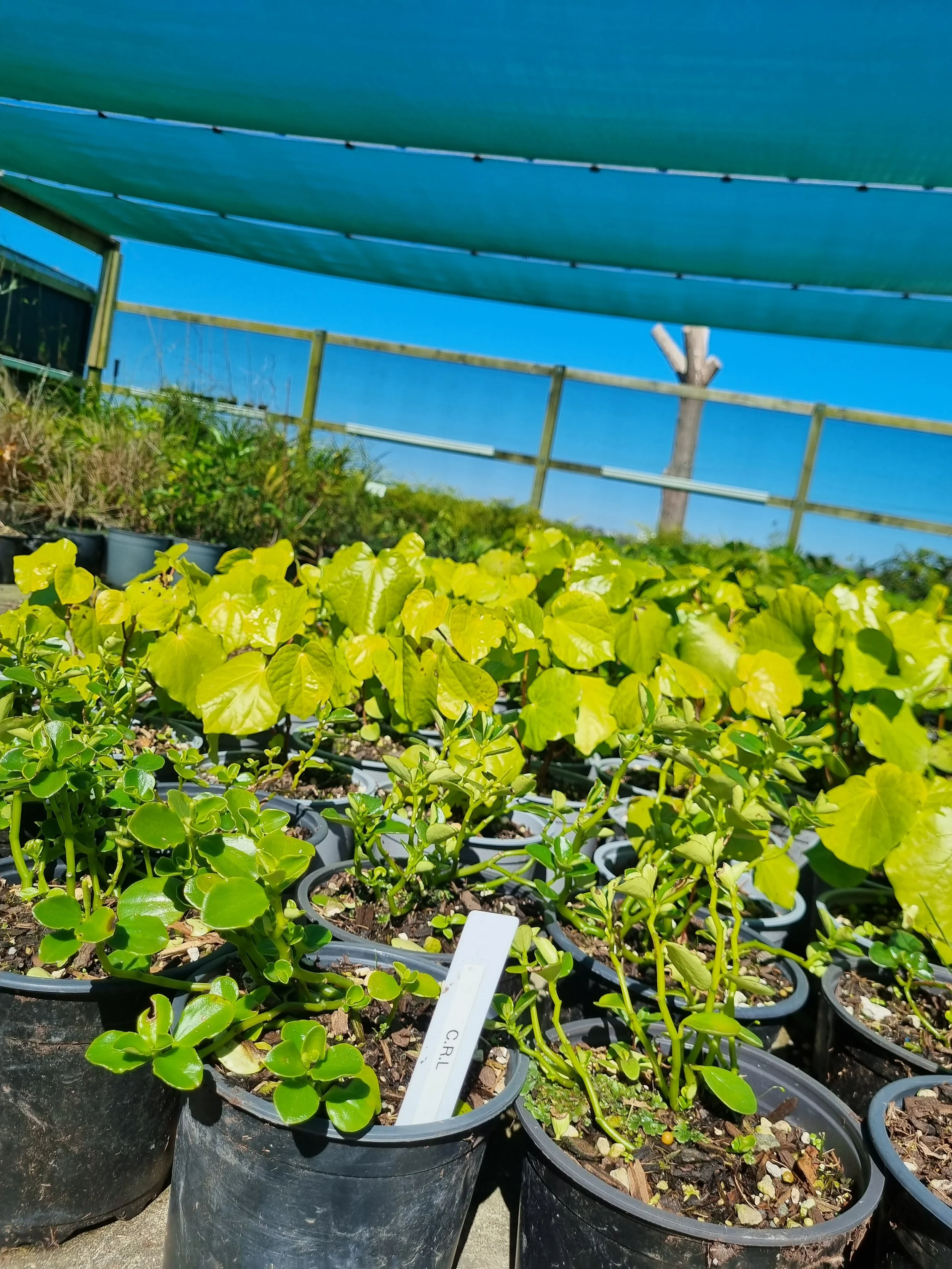
New trees and plants are maturing at two Tāmaki Makaurau nurseries. Trees are being grown at Blackbridge Nursery and plants at Pourewa Nursery, a Ngāti Whātua Ōrākei-led social enterprise.
Why are we planting?
We know that trees and plants are important to local community. They have a myriad of environmental, cultural, wellbeing and aesthetic benefits.
While we worked hard to minimise tree removals, some 206 native and exotic trees and shrubs needed to be taken out of construction zones. This was so that we could build two new train stations, majorly reconstruct two train stations and build the tunnels underneath Albert Street and lower Queen Street. Where possible they were replanted in other areas in Auckland or offered to mana whenua and local craftspeople.
The planned removal of vegetation and trees, as well as replanting programme was completed in accordance with Delivery Work Plans and approved by Auckland Council.
Where will planting happen?
Some 78 trees and thousands of new understory plants are being planted around CRL stations and surrounding streets.

The team has been busy building tree pits and installing planting areas around CRL stations.
These will allow trees and plants to grow bigger and healthier.
The number of trees being replanted around stations is less than what was removed because of the space that the new underground station boxes and tunnels occupy.
This is why we’ve chosen the four additional planting areas for 315 new trees and further understory plants.
Read or download these fact sheets
To read this full screen, press on the square symbol at the bottom right of the box.
The document then opens in a new tab. Press the escape key to return to this page.
To download, when you view full screen, depending on your browser, there is an arrow at the top left of the screen - click on that.
Tree Fact Sheet
PDF 567KB
Notable trees & Vegetation
PDF 4.7MB
FAQs
How many trees & plants are being planted?
393 trees and over 4,000 plants
Where are trees being planted?
13 trees at Te Komititanga and around Waitematā Station (Britomart)
23 trees along lower Albert Street
13 trees and native plants at Te Waihorotiu Station
4 trees and native plants at Karanga-a-Hape Station
25 trees and native plants at Maungawhau Station
315 at four Auckland Council-owned locations in the inner-city
What tree species are being planted?
Akeake
Houpara
Kahikatea
Karaka
Kohekohe
Kowhai
Māhoe
Nīkau
Oriental plane (cutting from Harvey Tree outside 93 Albert St)
Pohutukawa
Pūriri
Rangiora
Red māpou
Rewarewa
·Taraire
Tawapou
Ti Kouka
Tītoki
Totara
Tulip trees on Mayoral Dr
Whau
White Maire
What plant species are being planted?
Akakura
Huruhuru whenua
Kawakawa
Kiekie
Kiokio
Koromiko
Kōwaowao
Mikokoi
Ota
Pinatoro
Piripiri
Pohuehu
Pukupuku
Sand coprosma
Toatoa
Toetoe
Turutu
Wharariki
Wharenui
How many and what type of trees and plants were removed?
Approximately 206 trees and plants were removed to facilitate construction. The trees and plants varied in species, age and size. Most were exotics and not notable. A small amount were native trees.
When and how were the public consulted about the tree removals?
The consenting process for the CRL progressed in 2012, when Auckland Transport lodged Notices of Requirement with Auckland Council. The notices were publicly notified and were the subject of a public submissions process, hearing and subsequent Environment Court appeals. This process concluded with confirmation of the designations, including a suite of conditions outlining how effects on trees should be assessed and mitigated.
What are the conditions of the designation?
The main conditions related to trees are as follows:
Removal of scheduled or notable trees should be avoided as far as practicable
A trees and vegetation plan must be implemented to identify and manage the adverse effects of construction on trees and vegetation
Consideration must be given as to whether it is appropriate and feasible to transplant or store trees
Trees near construction areas that don’t need to be removed must be adequately protected during construction
New trees must be planted across the project at a minimum 1:1 ratio.
Will any notable trees be removed?
There are 14 tulip trees on Mayoral Drive that needed to be removed. These 14 trees were part of a wider group of 167 tulip trees. This group of tulip trees is identified as notable within the Auckland Unitary Plan. In terms of mitigation for this particular group, large grade (around 5-6m high) replacement tulip trees were planted within the vicinity of the project area so as to continue the boulevard effect of the wider group. In Mt Eden, another notable tree known as the flame tree is being assessed.
Why couldn’t we temporarily transplant the trees somewhere else, like they have done on Quay Street?

In a number of cases, the tree roots were deeply entangled with multiple underground utilities, which make it difficult to transplant and reduce the likelihood of survival. Other trees were in poor health or have reached a level of maturity that makes successful transplanting unlikely. The cost to transplant a tree includes removal, transport, storage and care as well as the cost to replant the tree again. The decision to transplant was also weighed up against the cost of sourcing new trees from a nursery.
What is the Harvey Tree?
The Harvey Tree, (right), an oriental plane tree growing outside 93 Albert Street, was planted in the 1960s or 70s by businessman Les Harvey.
It had to be removed as its roots were severely intertwined with the utilities (gas, water mains, electrical cables) beneath the footpath.
The roots were so intertwined there was a risk that trying to relocate it could kill the tree.
The Harvey Tree, along with four others along this same stretch of Albert Street, were removed because they were in the footprint of Te Waihorotiu Station construction.
What happened to the Harvey Tree and the plinth next to it?
Cuttings from the historic Harvey Tree were cultivated in a nursery, ready to take the place of their parent tree which had to be removed for station works.